LICHEN LENS

What is a lichen Lens?
A lichen Lens is similar to a gabion cage or basket. However, the focus of this gabion is very different from the traditional one, which is more focused on the stability of slopes or the protection against erosion. This gabion rather acts as a ‘living wall’, a vertical mutual place that invites and re-connects both humans and non-humans to come together, thrive, and interact.
Each Lichen Lens starts with a variety of blank bioreceptive stones, which invites lichen to gradually pioneer the structure, initiate the process of succession and pave the way for other species to take over. Initiated by its own surroundings and history, a spontaneous and unique vegetation of both flora and fauna and ecological diversity will appear. The goal is that the gabion cages will eventually come alive with local flora, as vines, moss, and lichen take hold. Furthermore, the stone landscape can act as a vessel to create nesting and hibernation for a wide mix of wildlife; insects, invertebrates, small mammals, and even possibly birds. However, the structure is designed with a particular focus on lichen.

%20(8)-min.png)
-min.png)
Ecological Succesion
Lichen can be invited by the provision of a suitable habitat and their growth can be catalyzed through the application of particular substances. The Lichen Lens habitat contains a variety of natural stones with different properties such as hardness, roughness, pH value, porosity, and mineral composition. This variety of substrates will attract different species of lichen, meaning that over time each Lichen Lens will change, evolve, and form its unique aesthetic and biodiverse habitat, similar to rif, but on land.
The gabions can be filled with three types of stones: 1. Locally quarried stones (recycled aggregates), 2. Imported natural stones (such as basalt, granite), 3. concrete mixed boulders (recycled concrete & waste materials). All types of stones are of interest because they give historical value to the concept and raise questions such as, how relocated lichen will adapt to a new environment and whether lichen will take hold at all. (which Lichen Lens will be filled with what type of stone, depends on the local feasibility and aesthetic preference.)
The Lichen Lens aims to make such environmental changes more tangible and visible, while embracing the gradual growth of lichen by showing that these changes are subtle and that the interaction with the structure is about giving lichen enough time and space to grow.
.png)

How to use the magnifying glass

This project aims to make people feel, follow and see this resilient process ecological succession and to understand and experience lichens’ true capacity and temporal nature by magnifying its subtle details and signs of change through an intimate and physical exploration (Sliding lens).
Find other Lichen Lenses
Click on the number to see more information about that lichen Lens & to upload corresponding photo(s).

Selected lichen Lens: [N.7]
Location: Arnhem
Date of placement: 22-3-2018
Type of stones: Natural stone, boulders
collected in Scandinavian
Living Time-line Gallery [N.7]
Biodiversity log [N.7]
LICHEN SPECIES:Groot Dooiermos, Heksenvingermos, Eikenmos, Bos Schildmos, Poedergeelkorst, Vals dooiermos, Bekermos
FLORA:Lolium (grass), Elytrigia repens (Grass), Campylopus introflexus (Moss), Mnium hornum (Moss), Pteridium aquillinum (Fern)
FAUNA: ladybugs, bumblebees, lacewings, woodlice, earwigs, wild bees, butterflies, beatles, stink bugs, mice


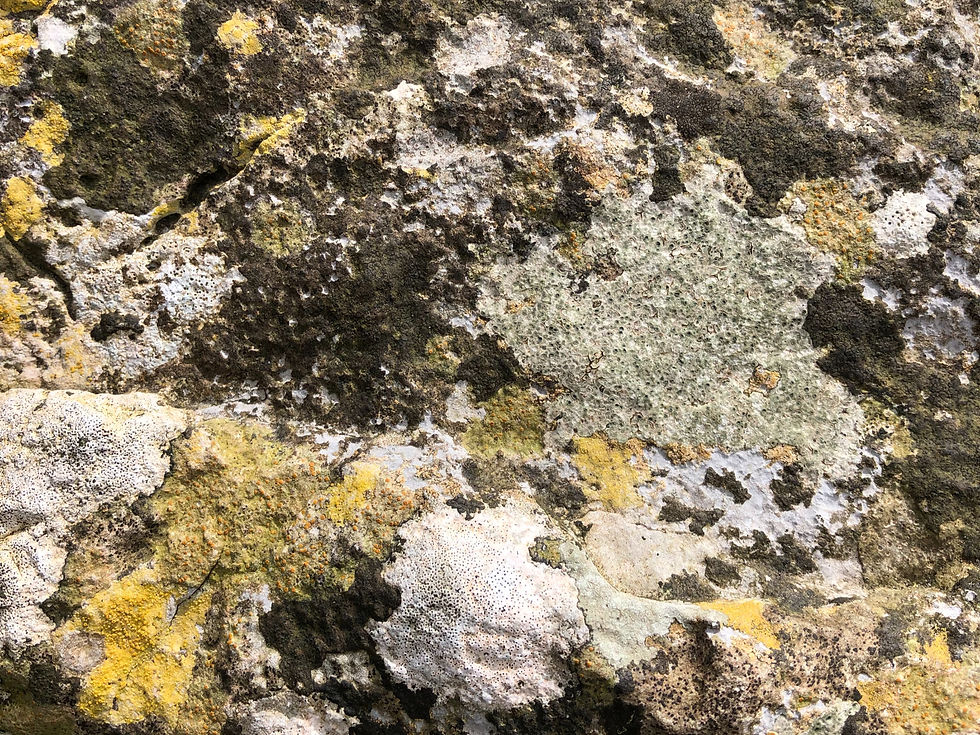

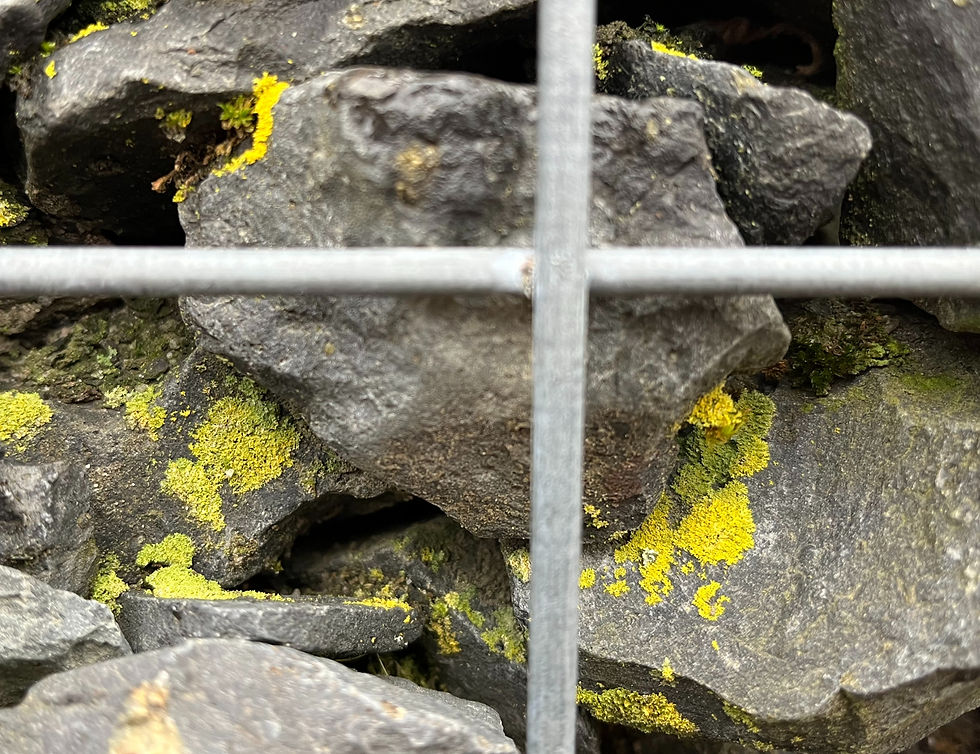

The project encourages you to revisit the structure, capture these small changes, and share your findings with others, including the lichens you encountered dyrung your walking routes. But how do you recognize these changes, how do lichens look, what do they mean, and where can you find them?